In the practice of Jyotisha, the basic premise establishes that each of the planets emits colored rays of light: the rays of the Sun are red, Moon orange, Mars yellow, Mercury green, Jupiter blue, Venus indigo, Saturn violet, Rahu ultraviolet, and Ketu infrared
Prep Time 30 minutesminutes
Cook Time 9 hourshours
Marinating Time 2 daysdays
Total Time 2 daysdays9 hourshours30 minutesminutes
Ingredients
For the pork
6poundsbone-in, skin-on pork picnic shoulder
1teaspoonsalt(for the skin)
½teaspoonground black pepper(for the skin)
Lime wedges(for serving, optional)
For the mojo marinade
10clovesgarlic (peeled)
1tablespoonsalt
1 ½tspsground black pepper
1 tablespoondried oregano
1 tablespoonground cumin
1teaspoononion powder
½teaspoonground allspice
1cupsour orange juice(naranja agria)
½cupolive oil
Instructions
Prevent your screen from going dark
Make the mojo.
Using a pilón (mortar and pestle) or food processor, mash the garlic with the salt until you have a paste. The salt helps break down the garlic as you mash it.
Add the black pepper, oregano, cumin, onion powder, and allspice and mix to combine. Stir the garlic mixture into the sour orange juice, then add the olive oil and mix well.
Prepare the pork.
Pat the pork shoulder thoroughly dry with paper towels. Place it skin-side up on a clean cutting board.
Using a sharp knife, carefully separate the skin from the meat, leaving one edge attached so that the skin opens like the page of a book.
With the tip of your knife, make deep pockets throughout the exposed meat without cutting all the way through the roast.
Season the meat.
Pour and rub the mojo over the exposed pork, working it over the sides, underneath the skin, and especially into the pockets you made in the meat.
Fold the skin back over the pork.
If desired, use a sharp knife to score the skin in a crosshatch or diamond pattern. Cut through the tough skin without cutting deeply into the meat.
Season both sides of the skin flap with approximately 1 teaspoon salt and ½ teaspoon black pepper.
Marinate.
Place the pork in an airtight container or food-safe roasting/turkey bag. Refrigerate for at least 12 hours and up to 48 hours.
For the best flavor, I like to season my pernil the day before I plan to cook it.
Roast low and slow.
When you're ready to cook, remove the pork from the refrigerator while the oven preheats to 250°F.
Place the pork skin-side up in a heavy, deep roasting pan. Roast for approximately 8 hours, or until the pork is extremely tender.
Don't rely on the clock alone. A fork or temperature probe should slide into the thickest part of the pork with very little resistance, the bone should wiggle easily, and the meat should readily pull apart. For shreddable pork shoulder, the internal temperature will typically be around 195–205°F.
Crisp the skin.
Carefully transfer the tender pork to a clean roasting pan, reserving the cooking juices from the original pan.
Increase the oven temperature to 425°F.
If the surface of the skin is wet, gently pat it dry with a paper towel. Return the pork to the oven uncovered and roast for approximately 30–45 minutes, or until the skin is dried, tight, and crisp.
Here's my favorite test: gently tap the skin with the back of a knife. You should hear it. It should sound firm and crunchy rather than feel soft or soggy.
Keep an eye on it during this final stage. Once the skin begins crisping, it can change quickly.
Rest the pernil.
Remove the pork from the oven and let it rest for at least 30 minutes.
Don't skip the rest—we've waited this long!
Shred and serve.
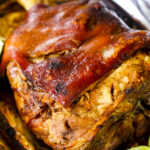
Carefully remove the crispy skin. Your cuero has now become the best part: chicharrón. Break or cut it into pieces for serving.
Remove the bone and pull the pork into bite-size pieces or chunky shreds. Spoon some of the reserved pork juices over the meat to keep it juicy and flavorful.
Just before serving, I love squeezing a little fresh lime juice over the pork. You don't need much. It's not there to make the pork taste like lime—it just wakes everything back up.
Notes
Neyssa's Success TipsGet the mojo inside the pork. A six-pound pork shoulder is thick. Don't just season the surface—those pockets give the garlic, sour orange, and seasonings direct contact with more of the meat.Keep the skin dry before crisping. Mojo is wonderful for the meat but moisture works against crispy skin. If the cuero looks wet after the slow roast, blot it dry before increasing the heat. Don't cook by time alone. Eight hours is your guide, not a finish line. If the bone doesn't wiggle and a probe still meets resistance, the pork needs more time.Save those juices. The liquid left in the roasting pan is packed with flavor. Spoon some over the shredded pork instead of letting it go to waste. Listen to your cuero. When you tap properly crisp skin with the back of a knife, you'll hear that hard, crunchy sound. If it still feels soft and bends easily, it isn't chicharrón yet.Not familiar with sour orange? It's a blend of equal parts of fresh orange juice and lime juice together. They also sell it already bottled, if you prefer to use that.